

There is a kind of weather that arrives in Nairobi when the long rains begin — slow, generous, expected. The mornings get heavy. Coffee tastes better. Plans are made and unmade between phone calls.
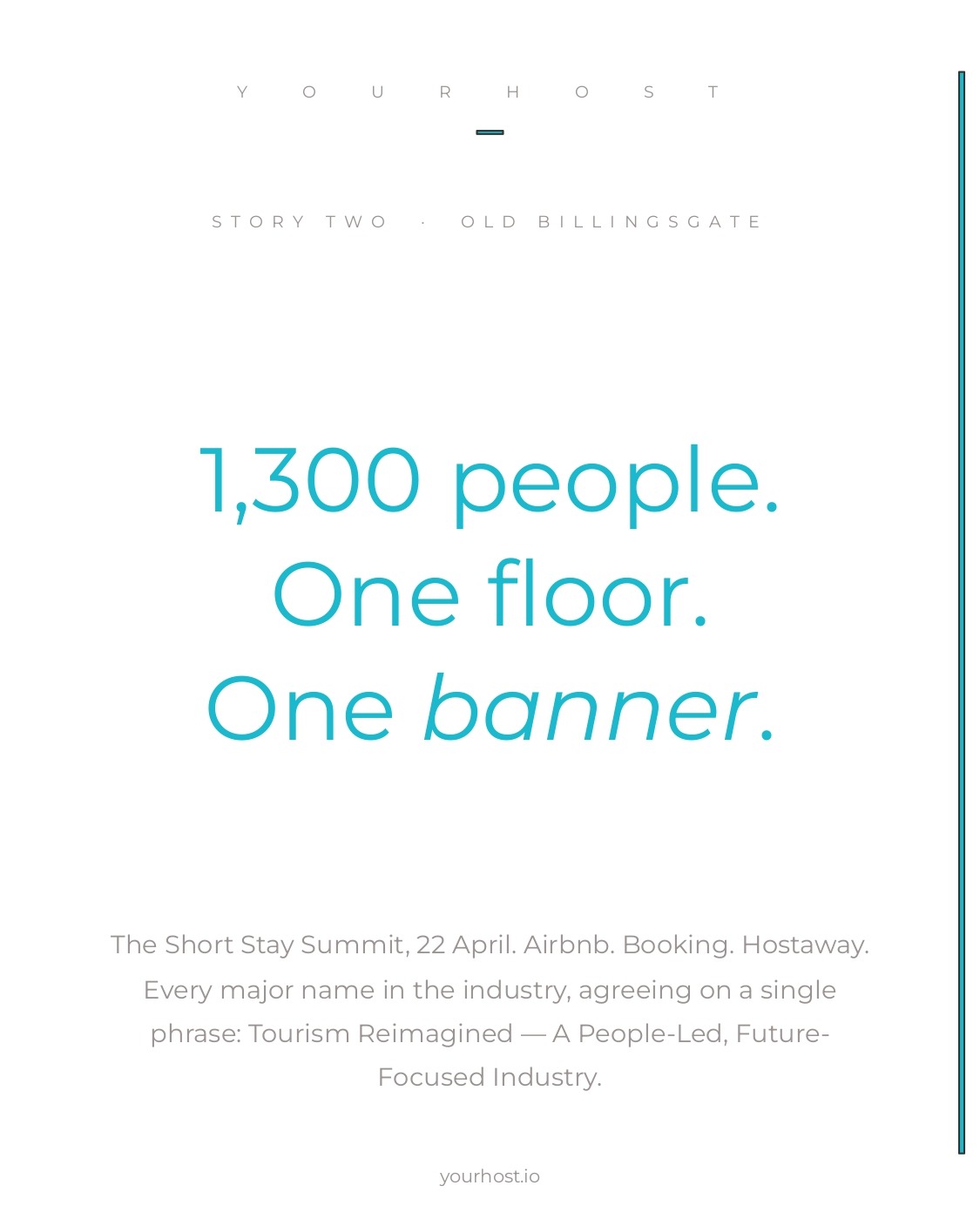
I was reading dispatches from London this morning. Specifically, from Old Billingsgate, where a thousand and more people gathered last Wednesday at the Short Stay Summit. Airbnb. Booking. Hostaway. PriceLabs. Smoobu. The whole short-term-rental industry on a single floor, under a single banner: Tourism Reimagined: A People-Led, Future-Focused Industry.


I have read the dispatches now four or five times. What I keep noticing is something quieter. From outside, East Africa moves slowly. Inside, technology has always moved at the rhythm of the people using it, not at the rhythm of product launches.
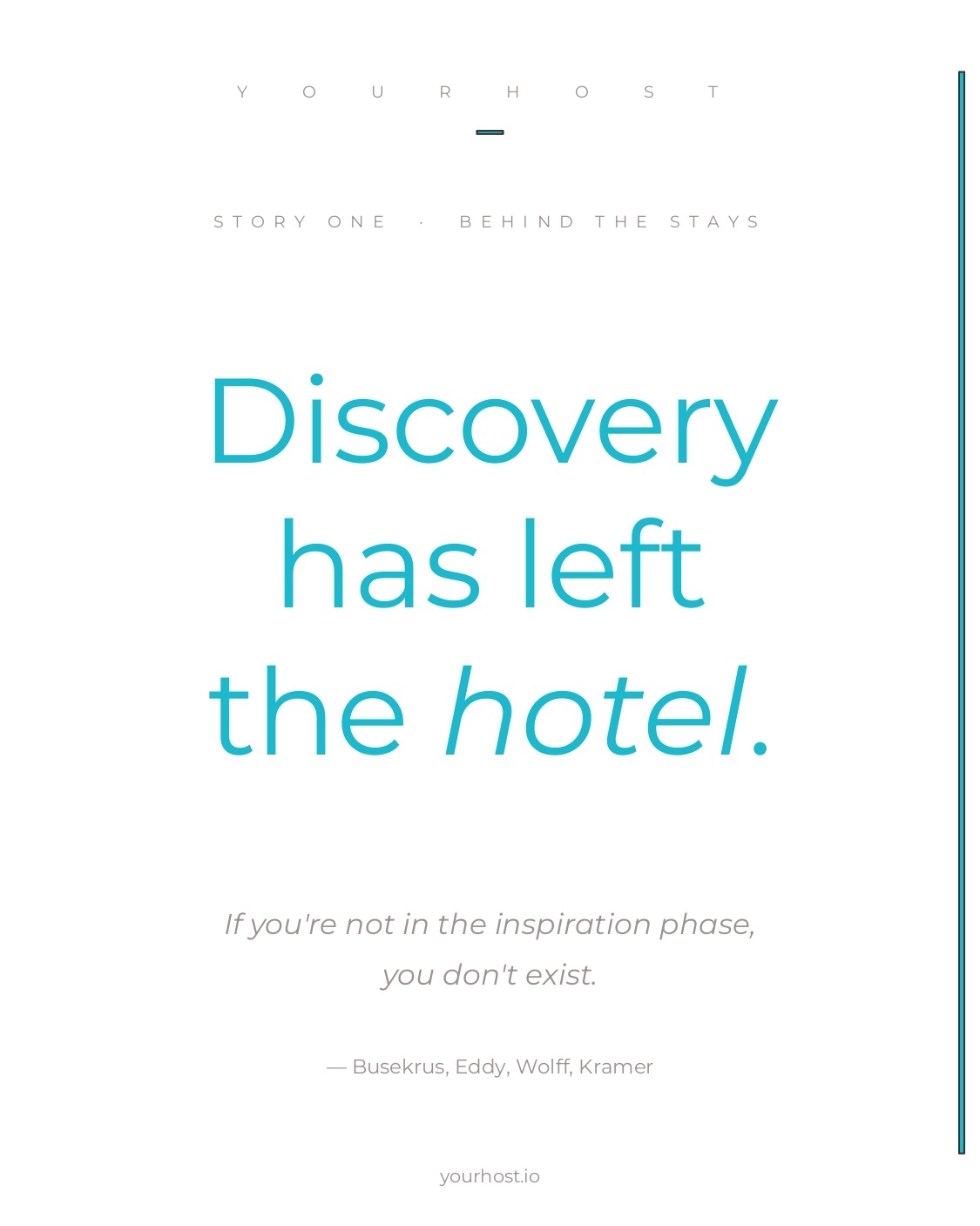
Two weeks before the Summit, on a Behind the Stays roundtable, Zach Busekrus, Scott Eddy, Ben Wolff and Edwin Kramer ran an episode they titled The Death of Hotel Discovery, The Rise of Food-Led Hotels, and Loyalty’s Identity Crisis. They had three subjects on the table that day. They are the same subject.
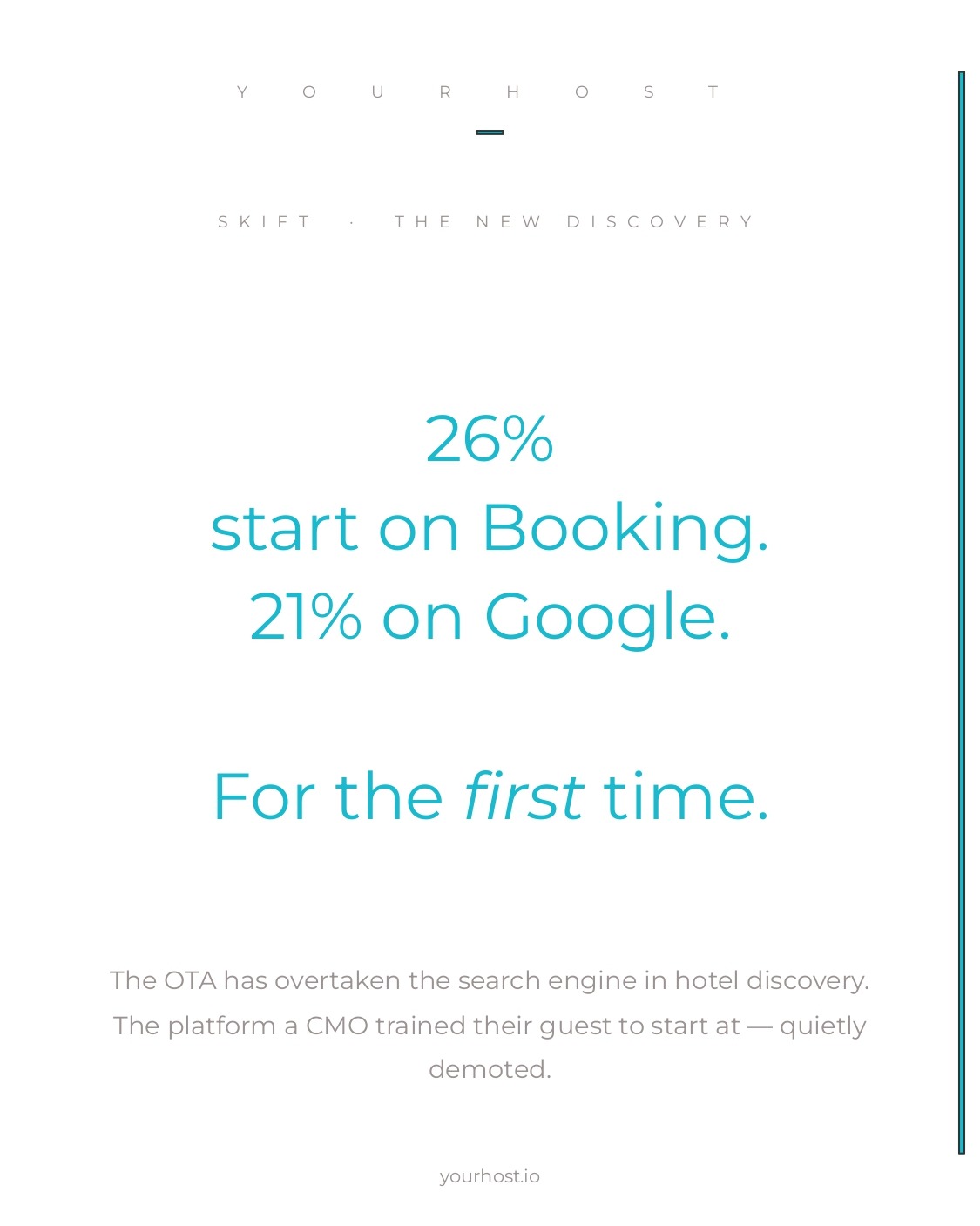
They began with a number from the most recent Skift survey. For the first time in the history of the industry, more travellers begin their hotel search on Booking.com than on Google — twenty-six percent versus twenty-one. The platform a hotel CMO has spent fifteen years training the guest to start at has been quietly demoted to second place by the channel hotels were taught to fear.
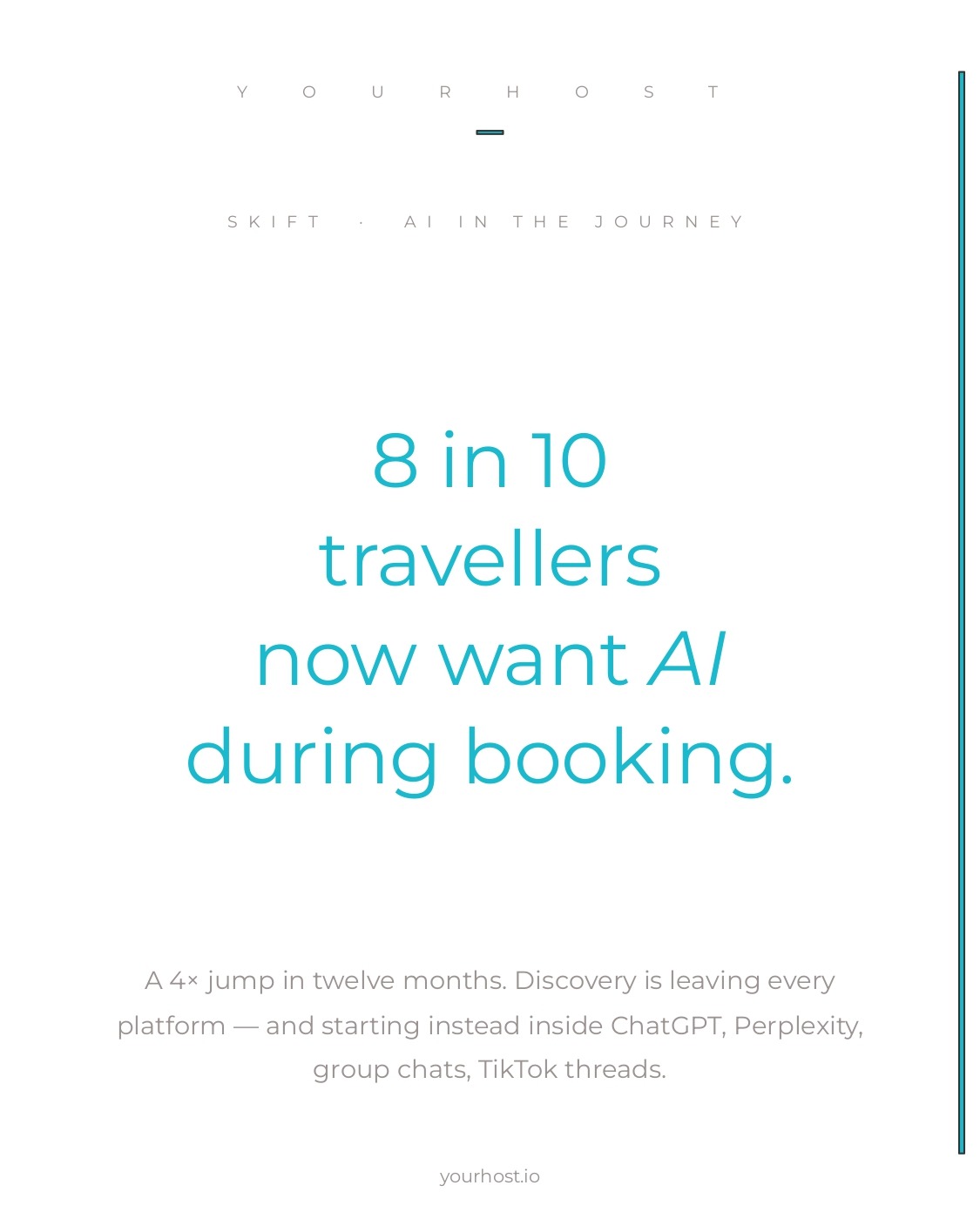
They moved to the second number. Eight out of ten travellers now want AI assistance during their booking journey. A four-times increase in a single year. Discovery is no longer leaving the hotel website. It is leaving the website, leaving Google, leaving the OTA, leaving the booking page itself — and beginning instead inside ChatGPT, Perplexity, a group chat, a TikTok comment thread. By the time a traveller arrives at any platform with a Book Now button, she has been through thirty to forty-five touchpoints. Booking is no longer a session. It is a sequence.
If you’re not in the inspiration phase, you don’t exist.
And then, almost in the same breath, the third subject. Loyalty’s identity crisis.
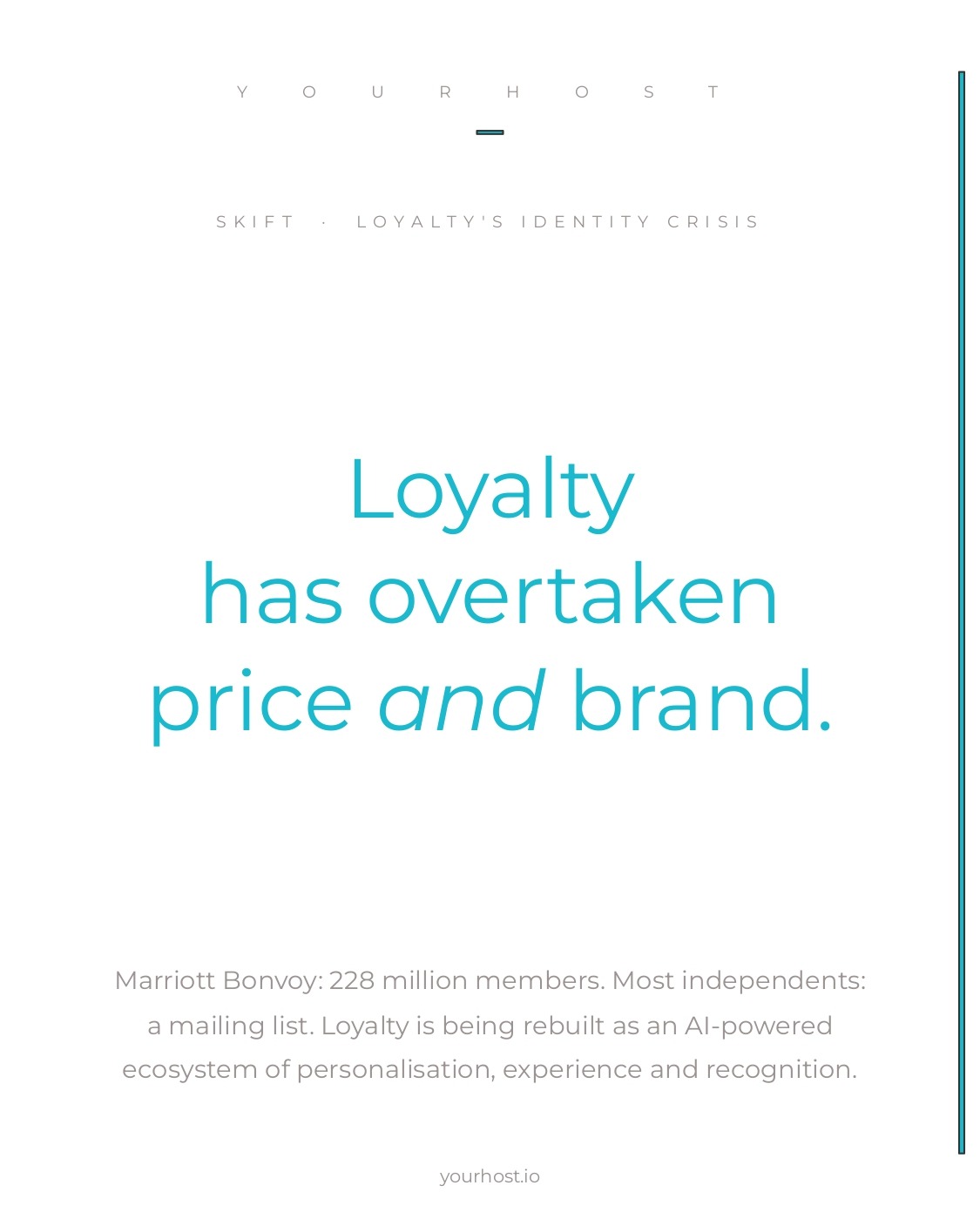
The same Skift research found that loyalty programs now rank above price and above brand in a traveller’s booking decision. Which is good news for Marriott Bonvoy — two hundred and twenty-eight million members, fourteen and a half percent growth in twelve months. It is less obvious news for the independent boutique hotel whose loyalty program is a mailing list. Skift’s Future of Hotel Loyalty report, released in February, names this directly. Loyalty is being rebuilt from the ground up. It is no longer a points program. It is becoming a data-driven, AI-powered ecosystem of personalisation, experience and recognition. Points are out. Relevance is in. The economics of the program have to deliver, the experience has to feel earned, and the AI has to know the guest well enough that the next offer feels like attention rather than an email blast.
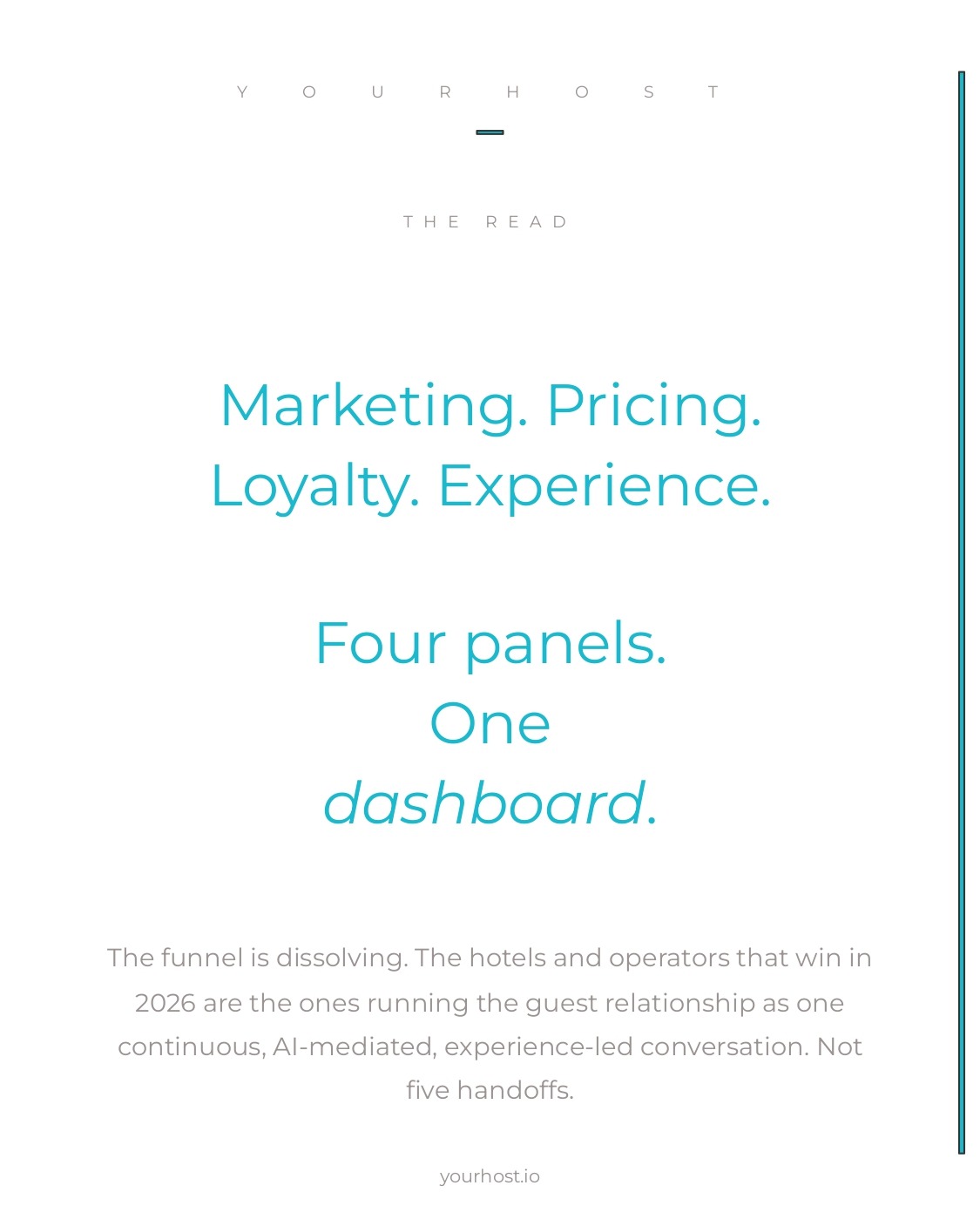
What the roundtable described, in three subjects, was a single repositioning of the entire industry. Marketing, distribution and loyalty are collapsing into one continuous, AI-mediated, experience-led guest relationship. The funnel has gone soft. The line between discovery and loyalty is dissolving. Every interaction — the first TikTok scroll, the third return visit, the welcome on arrival, the goodbye at the gate — is now part of one curated experience whose currency is taste.
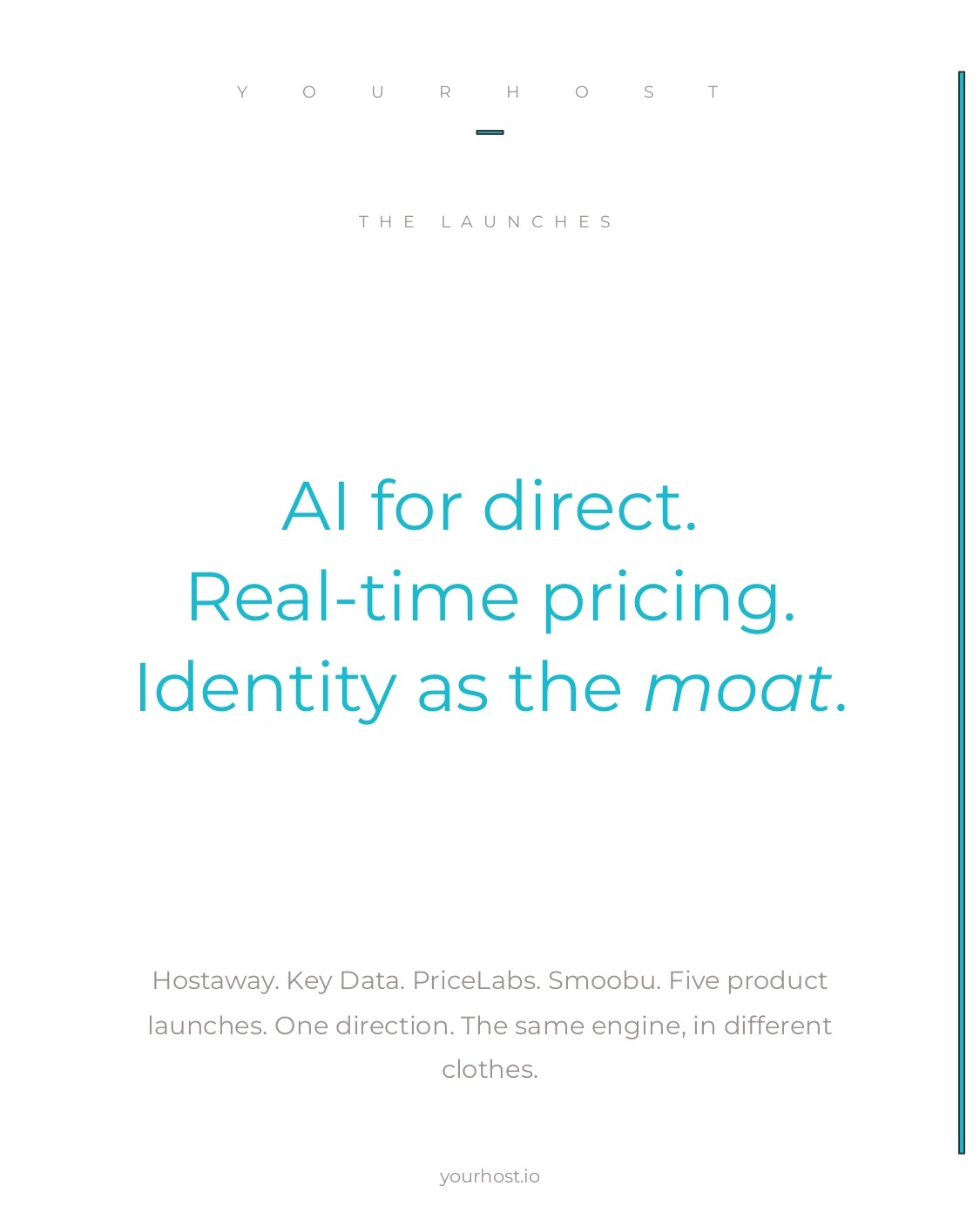
When London launched a wave of new tools — AI-driven booking websites, AI-powered data engines, real-time pricing platforms — what looked at first glance like five separate product announcements was actually one product becoming visible. The same engine that prices the room in real time also personalises the loyalty offer also writes the marketing copy also curates the experience. Marketing, pricing, loyalty and experience are now four panels of the same dashboard.
Which is why the headline figure from the Summit — 41.7% of stays now booking within seven days of arrival — reads operational on the surface and experiential underneath. A traveller making the decision sixty hours before arrival is not optimising on price. She is optimising on confidence. That the photographs are honest. That the host will reply. That the experience will hold. Real-time pricing is hygiene because every other system has to reach her at the speed of her decision. The price has to be live. The reply has to be live. The recommendation has to be live. The recognition, when she arrives, has to feel personal.
I read these things from Nairobi. Where the matatu driver picking up a guest at the airport already knows the children’s names by Tuesday. Where weekend plans for Watamu and Champagne Ridge form on a Friday afternoon, somewhere between the second cup of coffee and the moment everyone agrees the working day is over. Where the Westlands business trip arrives in the office calendar overnight, every night.
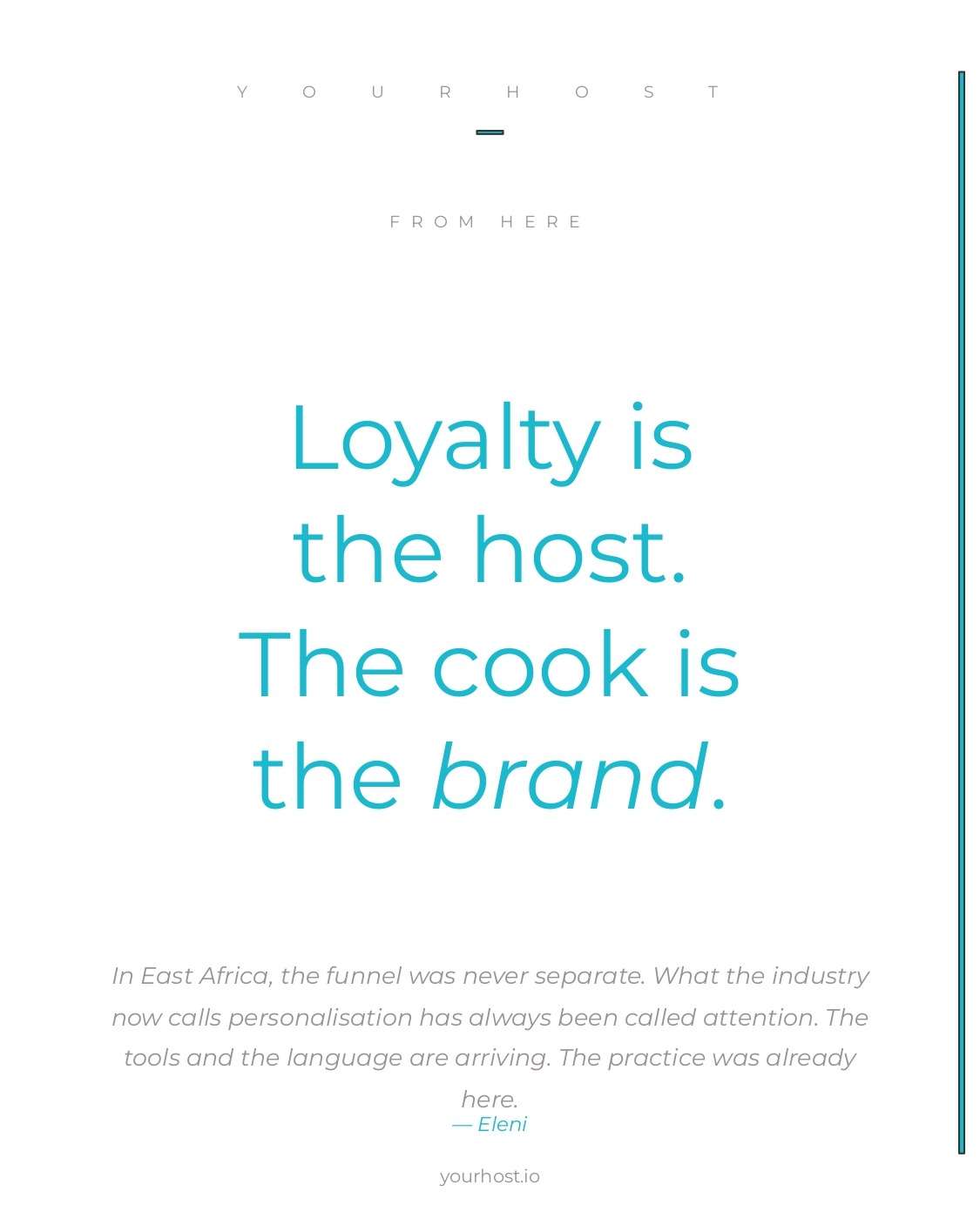
In Africa, loyalty is the host. The cook is the brand. The driver is the recommendation. The personalisation engine is a person. We have been running an AI-quality experience without the AI — by hand, with attention. Which means the moment AI arrives — and it has — what East Africa gains is leverage on something that already works. Not a substitute for something that doesn’t.
A billion dollars went into short-term-rental technology in the last twelve months — Mews, Hostaway, Limehome, Kindred. The first thing I notice is that almost none of it came to Africa. The headline is the geography. The story is what the geography means. Capital paid the research bill so the operator does not have to. The same property-management stack a London manager runs on is now available, at SaaS prices, to anyone with the discipline to use it. Which leaves only one part of the story still unwritten. The platforms have been funded. The operators using them — in the geographies with the strongest growth fundamentals — have not. Technology is no longer the differentiator. Taste is. And the operators writing the next chapter are no longer sitting in London.
Regulation, in the room, was being reframed as a moat rather than a threat. Stricter rules push the amateurs out and grow the professional category. The rulebook for short-term rentals in Kenya is still half-written, county by county. The moat is forming. The question is who is already inside it when it closes. Compliance is cheap before the rules exist. It is expensive once they do. The window is now.
And the announcement, made as if it were a discovery — that the future of hospitality is people-led — I think about the cook who has been in one of our houses since 2019, and who learns the children’s names of every guest who stays more than two nights. About the host in Watamu who knows which veranda catches the sun first in March, and walks his guests to it without asking. About the driver who waits at the airport with mango juice. About the small, accumulated, unnoticed acts of attention that East Africa has always called hospitality, and that the industry is just now learning to call a competitive advantage.
The thing every European boutique brand is reverse-engineering with millions in design fees is the cultural default of this region.
We did not invent felt experience. We just never stopped doing it.
So when the Summit ends, and the photographs of Old Billingsgate are filed, and the dispatches go up and the LinkedIn posts go out — the read from Nairobi is, I think, quite simple.
Behind the Stays said discovery has left the hotel. London said the future is people, identity and felt experience. Both of them are describing what East Africa was doing while the conversation was elsewhere.
Africa is not late to Tourism Reimagined.
Africa was the rough draft.
— Eleni
Sources
- Behind the Stays — The Death of Hotel Discovery, The Rise of Food-Led Hotels, and Loyalty’s Identity Crisis (3 April 2026)
- Skift Research — The Future of Hotel Loyalty: Personalization, Direct Booking, and the Rise of Experience-Led Travel
- Skift — Why Hotel Loyalty Is No Longer Just a Marketing Tool (17 April 2026)
- Skift / SiteMinder — Hotels to Show Up When AI Does the Booking (15 April 2026)
- Short Stay Summit 2026 Returns to London (10 Minutes News for Hoteliers)
- How the Short Stay Summit 2026 Redefines Hospitality Tech and AI (Travel & Tour World)
- Abode Worldwide — Hospitality Tech Investment Index 2026 ($1B raised across 40 companies)
- Smoobu Insights 2026: What Over 200,000 Bookings Reveal
- Short Stay Summit official site
- Rental Scale-Up — Short Stay Summit London 2026